
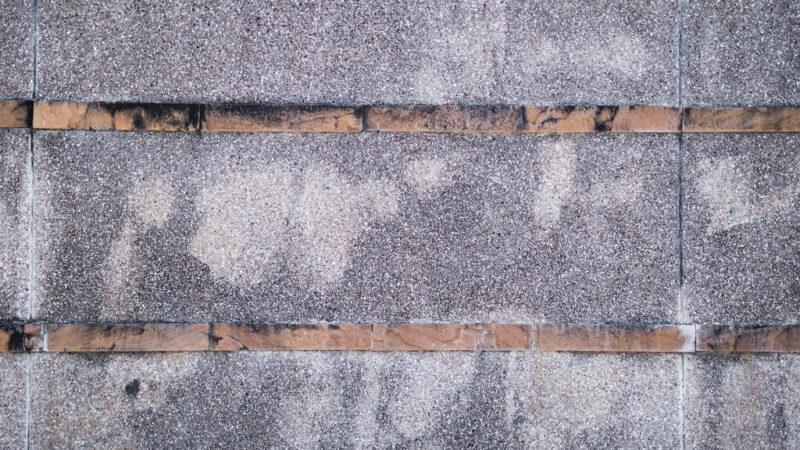
You check around your home after a stretch of rain or snow and notice that the dark streaks or patchy spots on your shingles stand out more than they did before. Now you are wondering whether it is just surface discoloration or roof mold quietly breaking down your roof.
In many cases, what we call roof mold is actually algae or lichen. That distinction matters more than most homeowners realize. Algae tends to stay on the surface, while lichen can anchor into the shingles and slowly wear them down over time.
Understanding what you’re looking at is the first step toward protecting your home from mold on the roof. Let’s break down what causes it, how to tell the difference between algae and lichen, and what to do next.
Table of Contents
What Is Roof Mold? (And Why It’s Often Misidentified)
Roof mold is a fungus that grows on and beneath shingles when moisture, organic material, and limited sunlight combine. It is most common in poorly ventilated, shaded areas and typically appears as dark, fuzzy patches rather than the blackish streaks caused by algae.
Most homeowners use “roof mold” as a catch-all for anything that looks off up there. Those dark streaks running down your shingles are usually algae, not mold. And if you are seeing rough, raised leafy patches that look like they are stuck to the surface, that is more likely lichen.
It is an easy mix-up to make, but it matters because proper labeling informs what comes next.
Mold vs. Algae vs. Lichen: How to Tell What's on Your Roof
| Organism | Appearance | Typical Location | Damage Level |
|---|---|---|---|
|
Algae (Gloeocapsa magma) |
Black or blue-green streaks
|
North-facing, shaded slopes |
Low, mostly cosmetic |
|
Mold |
Fuzzy dark patches, often near leaks |
Under shingles, attic decking
|
Moderate, can affect indoor air |
|
Lichen |
Crusty gray, green, or yellow raised patches |
Bonded directly to shingles |
High, causes granule loss |
|
Moss |
Thick green cushions |
Damp valleys, shaded areas |
Moderate, traps moisture |
What Causes Mold on Roof Shingles?
Mold on roof shingles is primarily caused by:
- Persistent Moisture:
If your roof stays damp for long stretches, growth has an easier time taking hold. This can happen in humid climates, after heavy rain, or when water can’t drain properly from your roof. It commonly forms on north facing services. - Shade From Trees:
Sunlight helps dry out your roof. When branches hang over and block that light, moisture can stick around longer than it should. - Organic Debris Buildup:
Leaves, pine needles, and other debris tend to collect in certain spots. Once they get wet, they retain moisture against your shingles. - Poor Attic Ventilation:
When warm, moist air gets trapped under the roof, it creates the ideal environment where mold and similar growth can develop from the inside out. - Shingle Composition:
Some asphalt shingles contain materials that algae feed on, making it easier for dark streaks to appear over time.
In colder regions of New Hampshire, Massachusetts, and across New England, freeze-thaw cycles can push moisture deeper into the roof system. That constant expansion and contraction make it easier for roof mold to take hold and cause long-term damage.
Mold From a Roof Leak: The Hidden Problem
Mold from a roof leak usually means that moisture has likely been sitting in your attic. Damaged shingles or flashing can allow water to soak into the decking, while poor ventilation can create condensation that leads to similar problems.
At that point, mold can spread into living spaces through attic openings, ductwork, and even light fixtures. If you notice mold or moisture in these spaces, it’s time to schedule a professional roof leak inspection before the damage spreads further.
How Dangerous Is Roof Mold, Really?
Roof mold may appear to be a surface issue, but its impact depends on where it is and what is actually growing.
Structural Damage
Roof mold can slowly wear down your shingles. Over time, the surface deteriorates, and the protective granules loosen, ultimately shortening your roof’s lifespan.
This can lead to bigger issues in the attic. When moisture hangs around long enough for mold to grow, it can start affecting the roof decking and nearby framing. What looks like a small, hidden spot can turn into extensive repairs.
Health Risks
Mold in the attic does not always stay put. Spores can make their way into your home through small openings, ductwork, or even recessed lighting. For some households, it may not cause noticeable problems right away. But for others, where residents deal with allergies, asthma, or other sensitivities, it can start to impact everyday comfort.
According to the EPA’s guidance on mold and health, exposure can lead to irritation and respiratory symptoms, including sneezing, a runny nose, itchy eyes, and skin rashes.
Why Lichen Is Often More Damaging Than Mold
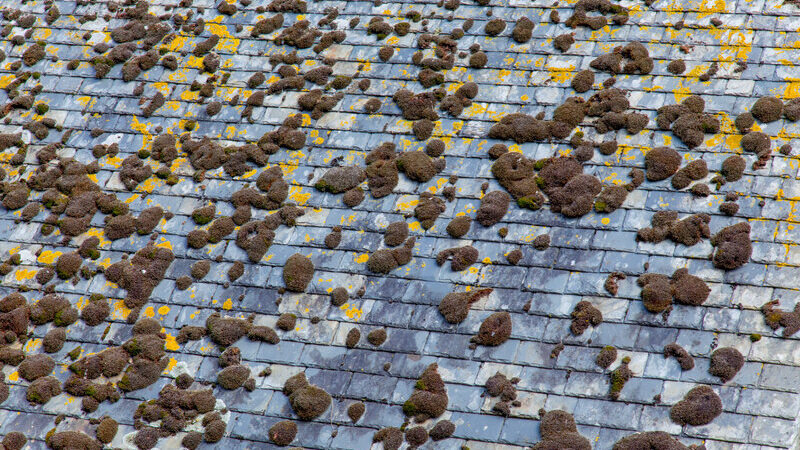
Lichen attaches itself and slowly wears the surface down. Here is why it is often more damaging than mold on the roof:
- It Bonds To Shingles:
Lichen burrows and anchors into the surface and can pull away protective granules as it grows. - It Traps Moisture:
Moisture gets trapped on the shingles instead of drying out, which speeds up wear. - It Worsens In Cold Climates:
Freeze and thaw cycles add extra stress when moisture is trapped underneath. - It Is Harder To Remove Safely:
Scrubbing too aggressively can damage the shingles more than the lichen itself.
Once lichen starts spreading across multiple areas, that’s usually an indicator of extensive roof damage.
How to Safely Remove Mold (and Lichen) From Your Roof
How do you remove mold from roof shingles?
For smaller areas that you can safely reach, a soft-wash method is usually the safest option. A simple mix of household bleach and water, applied gently and left to sit for about 15 to 20 minutes, can help break down surface growth before rinsing it away.
There are a few things you want to avoid:
- No Pressure Washing:
High pressure can strip away the protective granules on your shingles. - No Wire Brushes:
Scrubbing too hard and using wire brushes can damage the surface and shorten the roof’s lifespan. - No Walking on Wet or Steep Roofs:
This creates a safety risk and can also cause additional wear.
When the affected area is larger, harder to reach, or includes lichen, it is usually best to bring professional assistance. The same applies to attic mold, where the issue is tied to moisture inside the roof system.
Getting rid of roof mold often means removing insulation, treating the decking, and addressing the moisture source so it does not come back. If the damage has already spread, it may be time to consider a full shingle replacement to restore long-term performance.
How to Prevent Mold, Algae, and Lichen From Coming Back
Once you have cleared it off your roof, the next step is making sure it does not come back. Most prevention comes down to keeping your roof dry and exposed to enough sunlight.
A few simple steps can make a noticeable difference:
- Install Zinc Or Copper Strips:
These are placed near the ridge, and when it rains, they release small amounts of metal that help limit future growth. - Trim Overhanging Branches:
More sunlight and airflow help your roof dry faster after rain or snow. - Clean Gutters Regularly:
Keeping water moving off the roof reduces the chance of moisture sitting in one place. - Improve Attic Ventilation:
A balanced system with ridge and soffit vents helps prevent moisture from building up underneath the roof. - Stay On Top Of Maintenance:
Catching early signs of growth is much easier than reacting to widespread damage later. Regular upkeep, including annual roof maintenance, keeps small issues from turning into larger ones.
When It’s Time to Replace the Roof
There comes a point where cleaning is no longer enough.
- If you are seeing widespread granule loss, soft spots in the decking, or reappearing growth, the roof may be beyond maintenance and repair.
- Lichen spreading across multiple areas is another clear sign that a roof replacement is needed. By this stage, the shingle surface has usually begun to break down irreversibly.
If you are not sure about your roof’s condition, schedule a professional inspection.
Adam Vaillancourt Roofing & Gutters works with homeowners across a wide service area, including New Hampshire, Massachusetts, and Maine. Our team evaluates roofs and helps homeowners make informed roofing decisions based on detailed findings — not guesswork.
Frequently Asked Questions
Is roof mold dangerous to my family's health?
It can be, depending on where it is. Once mold is in the attic, it has a path into your home and begins to affect air quality.
What's the difference between mold, algae, and lichen on a roof?
Algae appears as streaks and is mostly a cosmetic issue. Mold tends to grow in damp, hidden areas. Mold, depending on severity, can affect air quality. Lichen is the one that really sticks around and can start breaking down the surface of your shingles.
Can I remove roof mold myself?
Gentle, DIY cleaning methods can work if the roof mold is contained in a small area and you can reach it safely. Once it spreads out, gets hard to reach, or looks more like lichen, it is usually better to leave mold removal to a professional.
Does roof mold mean I have a leak?
Not always. A lot of surface growth comes from moisture and shade alone. But if you are seeing mold in the attic, it usually means moisture is getting in from somewhere.
Will insurance pay to remove roof mold or lichen?
If roof mold is linked to a sudden event, such as storm damage, there may be coverage. If it builds up slowly over time, it is often treated as neglected maintenance and is not covered.
How long does lichen take to damage a roof?
Lichen can settle in fairly quickly, and once established, it slowly wears down the shingles. The longer it sits, the more noticeable that damage becomes.
Will Roof Mold Go Away On Its Own?
No. Roof mold may stop growing when there is no moisture, but that doesn’t mean it’s gone for good. It will reappear as soon as moist conditions return. Contact a professional to ensure roof mold is eliminated at the source.