Commercial Roof Snow Removal in NH, MA & ME
Snow buildup puts serious stress on commercial roofing systems, especially across New England, where heavy accumulation and freeze-thaw cycles are common. Excess weight, blocked drainage, and ice formation can quickly lead to leaks, structural stress, and costly damage if not addressed.
Adam Vaillancourt Roofing has specialized in commercial roofing since 2004, providing licensed and insured commercial roof snow removal across NH, MA, and ME. Our team delivers fast, professional service designed to protect flat and low-slope roofs.
Call now for a rapid response or schedule an assessment before the next storm.
Why Snow Removal Matters for Commercial Roofs
Snow adds weight fast, especially on flat and low-slope roofs where it does not shed naturally.
One inch of wet snow weighs about 1.66 pounds per square foot. On a 10,000-square-foot roof, 12 inches can add over 16,000 pounds of weight. As snow compacts or refreezes, that load increases.
Key risks include:
- Structural strain or failure
- Ice dams that trap water
- Blocked drains and poor runoff
- HVAC obstruction
- Liability from unsafe conditions
Older buildings may be more vulnerable if they were not designed to meet modern snow load standards.
Warning Signs Your Commercial Roof Needs Snow Removal
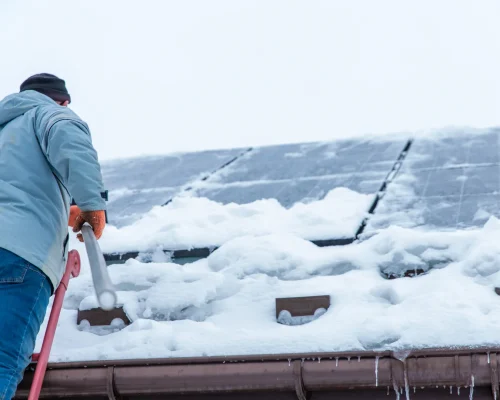
Too much snow on a commercial roof can cause structural stress, drainage issues, and interior damage. Warning signs include sagging, unusual noises, ice buildup, and water stains. If snow reaches 6 to 12 inches, it is time to evaluate removal.
Signs to Watch For:
- Sagging ceiling tiles or roof deflection
- Cracking or popping sounds
- Lowered sprinkler heads or pipes
- Doors or windows sticking
- Ice buildup along edges
- Interior water stains
These signs often point to uneven or excessive load.
If you notice any of these, contact us immediately for an emergency assessment. In some cases, conditions may already require storm damage repair.
How Much Does Snow Weigh on a Commercial Roof?
Snow weight varies by type and density:
| Snow Type | Weight (lbs/sq ft per 12") |
|---|---|
|
Fresh/Dry Snow |
3-7 lbs |
|
Packed/Settled Snow |
10-15 lbs |
|
Wet, Heavy Snow |
12-18 lbs |
|
Ice |
~57 lbs |
Most commercial roofs support 20 to 40 lbs per sq ft, but this depends on the building. New England’s freeze-thaw cycles increase weight, and drifting around equipment or parapets can create dangerous pressure points.
Our Commercial Roof Snow Removal Process
Our approach is built to remove snow safely while protecting your roofing system. With over 20 years of experience, our in-house crews understand how to work on TPO, EPDM, and other commercial membranes without causing damage.
Assessment & Snow Load Evaluation
We inspect accumulation depth, snow type, and high-risk areas like drifts around parapets and equipment to determine the safest removal plan.
Safety Setup & Fall Protection
Our crews follow OSHA standards with proper harnessing, access control, and ground-level safety zones to protect both workers and occupants.
Strategic Snow Removal
We remove heavy buildup first in high-risk areas, then work systematically to maintain balanced loads. We use non-metal tools to prevent membrane damage.
Drainage & Waterway Clearing
We clear drains, scuppers, valleys, and designated water pathways to restore proper flow. This helps ensure water can drain effectively as snow melts, reducing the risk of pooling and refreezing.
Equipment Clearance
Snow and ice are removed from around HVAC units, vents, and rooftop systems to maintain performance and prevent damage.
Post-Removal Inspection
We check for damage, confirm drainage is functioning, and provide documentation for your records.
As part of our full commercial roofing services, this process is designed to reduce risk, prevent costly repairs, and keep your building operational.
Why Hire a Professional for Roof Snow Removal
Removing snow from a commercial roof is not a simple maintenance task. Without proper training and equipment, it can lead to serious safety risks and costly damage.
Professional crews follow strict safety protocols and understand how to remove snow without compromising the roof system. This protects both the building and anyone working on it.
Our licensed and insured team handles the risk so you do not have to.
Snow weight varies by type and density:
- Damaging roofing membranes like TPO or EPDM
- Violating OSHA fall protection requirements for rooftop work
- Creating uneven snow removal that increases structural stress
- Voiding manufacturer warranties
- Missing hidden hazards like skylights, vents, or gas lines
Ice Dams on Commercial Buildings: Prevention and Removal
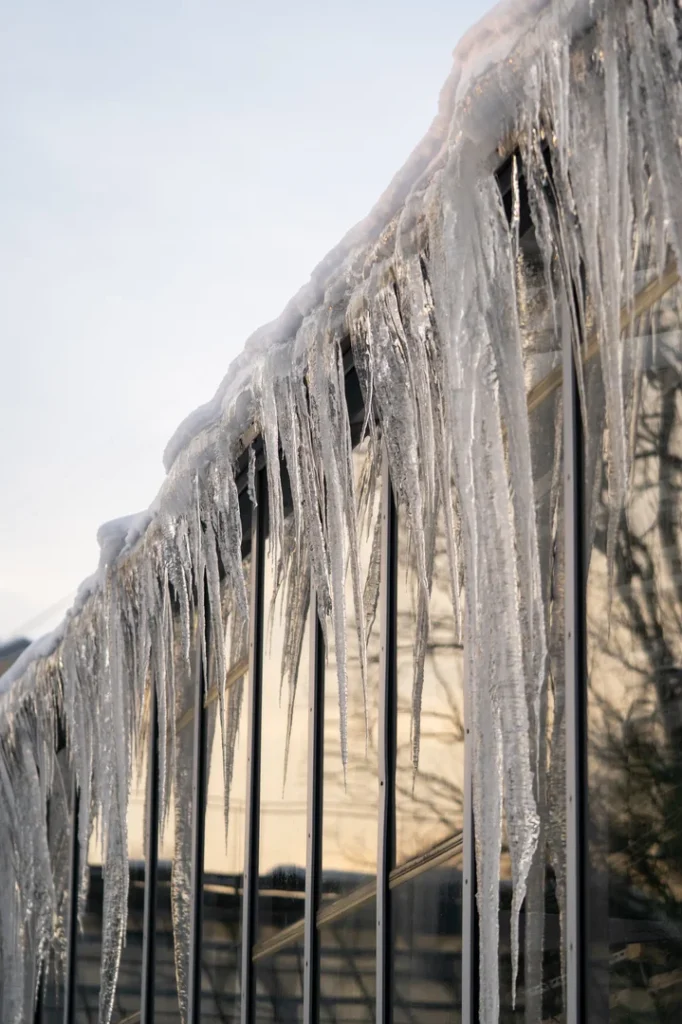
Ice dams form when snow melts and refreezes at roof edges, parapets, or elevation changes. This trapped ice blocks proper drainage and forces water beneath the roofing system, leading to leaks, membrane damage, and interior issues over time.
Common problem areas include:
- Roof edges and parapet walls
- Around drains and scuppers
- Near HVAC units or elevation changes
Preventing ice dams starts before they form.
Key steps include:
- Keeping drains and scuppers clear
- Addressing insulation and ventilation issues
- Removing snow before freeze-thaw cycles intensify
If ice dams are already present, safe removal is critical to avoid damaging the roof surface.
For long-term protection, effective ice dam prevention strategies can help reduce recurring issues and extend your roof’s lifespan.
Prepare Your Commercial Roof Before Winter
A little preparation before winter can prevent major issues once snow begins to accumulate. Proactive planning helps reduce risk, protect your roof system, and avoid emergency situations during peak storms.
Use this checklist to get ahead of the season:
- Schedule a professional roof inspection
- Clear all drains, scuppers, and gutters
- Confirm your roof’s snow load capacity
- Identify drift-prone areas like parapets and equipment
- Establish a snow removal plan before the first storm
- Review insurance coverage for snow-related damage
- Mark rooftop hazards like skylights and vents
Taking these steps early puts you in control before conditions become urgent. Our team can help identify vulnerabilities and prepare your building for the winter season.
Commercial Roof Snow Removal Across NH, MA & ME
We provide commercial roof snow removal across New Hampshire, Massachusetts, and Maine, with fast response times when conditions demand it. Our crews regularly service properties throughout southern NH, Massachusetts, and southern ME.
Warehouses and industrial facilities
Retail centers and office buildings
Condominiums and apartment complexes
Schools, churches, and municipal buildings
Whether you need planned service or emergency response after a storm, our team is equipped to handle snow removal safely and efficiently.
Frequently Asked Questions About Commercial Roof Snow Removal
How fast can you get to my commercial property?
Response times can vary depending on demand and conditions, especially during severe weather. Priority customers receive first availability, and our team responds to emergency calls as quickly as possible based on crew availability and safety.
How much snow can a commercial roof hold?
Most commercial roofs are designed to support a range of live loads, but capacity varies by building design and age. Wet snow and ice are significantly heavier, so even moderate accumulation can approach capacity faster than expected.
When should snow be removed from a commercial roof?
Snow removal is typically recommended when accumulation reaches 6 to 12 inches, depending on snow type and roof conditions. Wet or compacted snow requires earlier removal due to increased weight.
Can snow on a flat roof cause it to collapse?
Yes, flat and low-slope roofs are especially vulnerable because snow does not naturally shed and can accumulate unevenly.Uneven accumulation and drifting can create concentrated loads that increase the risk of structural failure.
Is it safe to remove snow from a commercial roof yourself?
No, it can be dangerous without proper training and equipment. Risks include falls, structural instability, and damage to the roofing system. Professional crews follow safety protocols and protect the roof during removal.
How do ice dams form on commercial buildings?
Ice dams form when melting snow refreezes at roof edges or around drainage points. This blocks water from draining properly and can force moisture under the roofing system.
Does commercial property insurance cover roof collapse from snow?
Coverage depends on your policy and maintenance history. Many policies cover sudden damage but may exclude issues caused by neglect or lack of proper maintenance.
What does commercial roof snow removal cost?
Costs vary based on roof size, snow depth, accessibility, and urgency. Emergency service and heavy accumulation typically increase pricing.
How do you prevent ice dams on a commercial roof?
Prevention includes proper insulation and ventilation, clearing drains before winter, and removing snow before freeze-thaw cycles create buildup.
Get Expert Commercial Roof Snow Removal
If snow is building up or conditions are becoming unsafe, do not wait. Our team provides fast, professional service across NH, MA, and ME to protect your building and reduce risk.
Contact us for a free estimate or call now for immediate assistance.