Location and Positioning Differences
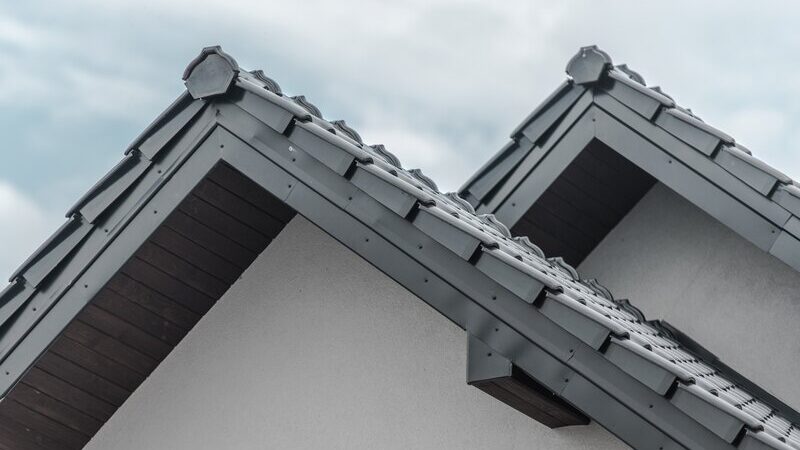
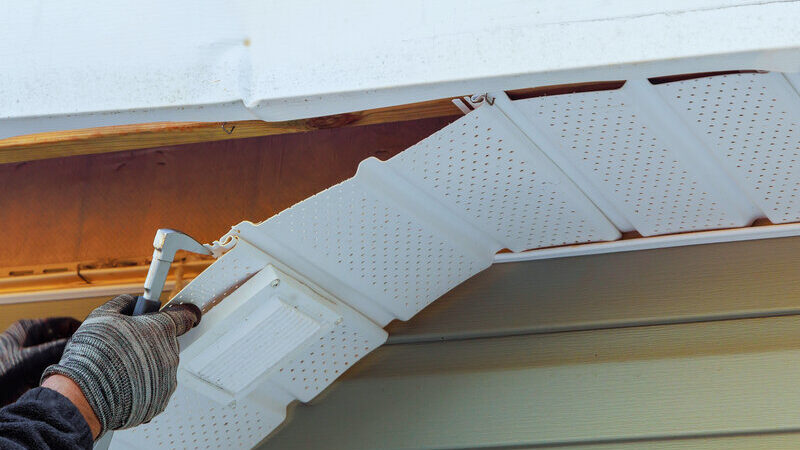
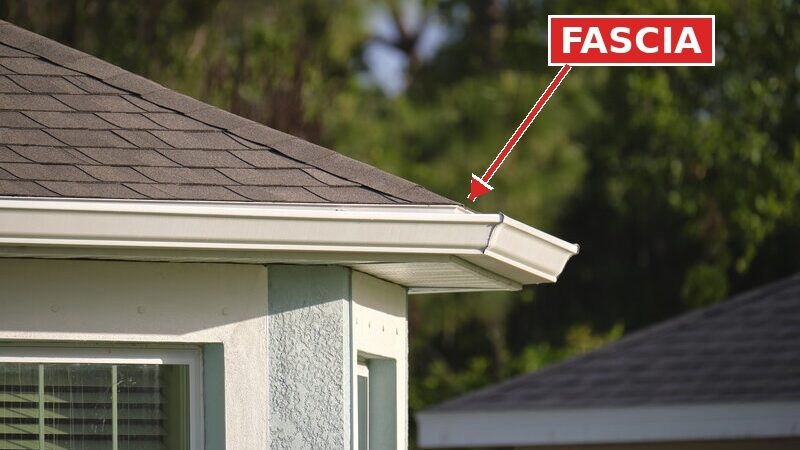
Soffits run horizontally underneath the roof overhang, creating the finished underside of the eaves, while fascia runs vertically along the outer edge of the roofline behind the gutters. The two connect directly along the roof edge where the gutter system mounts.
Fascia is usually easier to spot from the ground since it sits directly behind the gutters, while the soffit stays tucked beneath the overhang.
Functional Purpose Comparison
Although they sit side by side, the soffit and fascia handle different responsibilities.
- Soffit helps regulate attic airflow while protecting the underside of the roof overhang from moisture and pests. Proper ventilation becomes especially important during New England winters when warm attic air can create condensation near colder roof edges.
- Fascia focuses more on structural support and water management. It helps anchor gutters, protects exposed roof framing, and creates a finished edge along the roofline.
When one area starts failing, the surrounding components are usually not far behind. Clogged gutters can send water back against the fascia, while poor soffit ventilation can contribute to moisture buildup across the roofing system.
How Eaves, Soffit, and Fascia Work Together
The easiest way to understand the relationship among eaves, soffits, and fascia is to think of the roof edge as a single connected system.
The Complete Roofline System
The roofline works best when the eaves, soffit, and fascia all support each other as one connected system. The eaves create the overhang, the soffit helps ventilate and protect the underside, and the fascia seals the roof edge while supporting gutters that manage runoff from rain and snowmelt.
Your roofline system helps control:
- Roof drainage
- Attic ventilation
- Moisture exposure
- Pest intrusion
- Ice dam formation
Problems usually start affecting the whole system when one component fails. For example:
- Overflowing gutters can saturate fascia boards
- Blocked soffit ventilation can trap heat and moisture inside the attic
- Water intrusion around damaged roof edges can eventually spread into the decking and framing
Why They Must Be Maintained Together
Many roofline problems start with something fairly minor, like overflowing gutters or peeling paint near the fascia. Over time, moisture can spread behind the roof edge and affect nearby soffit panels, roof decking, and attic ventilation areas. Routine inspections and maintenance help catch these minor issues before they spread into larger sections of the roofline.
Common Misconceptions About Roof Components
Terms like soffit, fascia, eaves, trim, and overhang are often used interchangeably online and even during inspections, which can make it harder to understand what actually needs repair and how the different components connect.
“Aren’t Eaves and Soffits the Same Thing?”
Not quite.
The eaves are the full roof overhang extending past the exterior walls, while the soffit is the finished material attached underneath that overhang. The confusion usually arises because homeowners look at the underside of the roof edge and assume the entire area is the soffit.
Common Contractor Communication Issues
Roofing terminology can get confusing quickly during repair estimates, especially when multiple parts of the roof edge are involved at once. You might hear “fascia damage” during an inspection, but the actual issue could also include deteriorating soffit panels or gutter problems.
Ask the following questions when discussing repairs with a contractor:
- Which specific components are damaged?
- Is the issue cosmetic, structural, or ventilation-related?
- Has moisture spread beyond the visible area?
- Will gutters or ventilation need adjustments during repairs?
Maintenance and Inspection Tips
You probably don’t look at your soffit and fascia very often unless something around the roofline catches your attention. The problem is that moisture damage in these areas tends to build gradually, especially in New England, where snow, rain, and freeze-thaw cycles constantly stress the roofline.
When to Call a Professional
Minor cleaning or visual inspections from the ground are usually manageable, but repairs around roof edges can quickly become risky on steeper roofs or during colder months.
Consider scheduling a professional roof inspection when you notice:
- Gutters pulling away from the fascia
- Water staining beneath the overhang
- Soft spots or visible rot
- Animal or pest activity near the soffit vents
- Ice dams form repeatedly during winter
According to the National Roofing Contractors Association, regular roof inspections after storms help identify drainage problems, moisture damage, and ventilation issues before they cause larger structural repairs.
Schedule Your Roof Inspection Today
At Adam Vaillancourt Roofing & Gutters, we regularly inspect rooflines throughout New Hampshire and Massachusetts, where moisture, snow buildup, and freeze-thaw cycles constantly wear roofs down.
If something around your roofline catches your attention, our team can help determine whether the issue involves your soffit, fascia, eaves, gutters, or another part of the roofing system. Our team offers comprehensive roofing services to provide answers and resolve issues before they spread.